The World Brewers Cup was won by Nas Jaafar from Malaysia. He is 38 years old, and since starting in the coffee industry in 2014, he won his national title last year and then went straight to the world stage. I think it is quite remarkable.
He used a Geisha bean from Finca Nuguo in Panama. This coffee grows at an altitude of 1,700 metres. The processing used was natural anaerobic, which usually means it tastes a bit like compost if they mess it up, but apparently this bean was handled successfully. They say it tasted like hibiscus, apricot, and red apple, with a hint of sugarcane at the end.
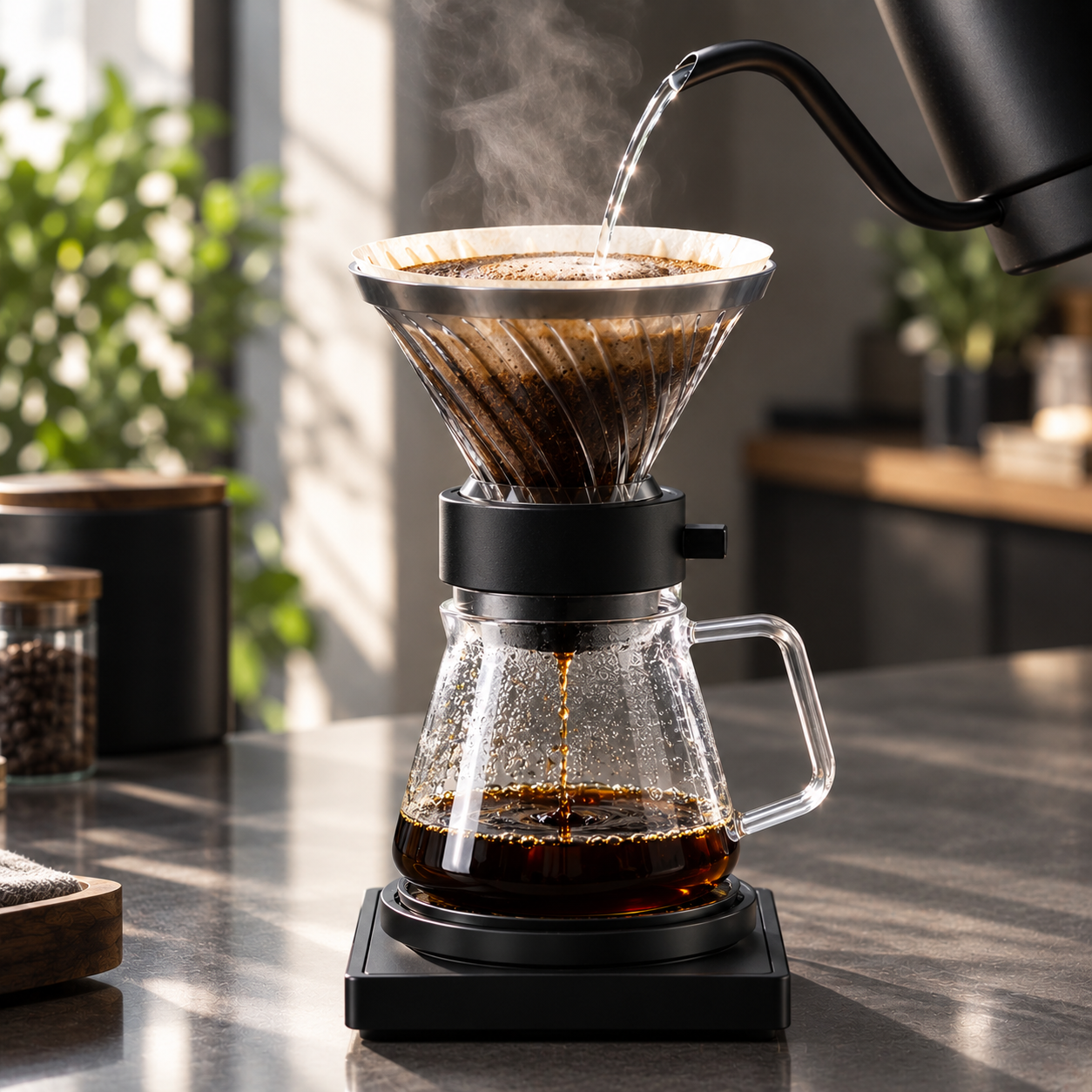
The gear he used was a UFO V3 dripper mounted on a Hario Switch base. The internal walls of the dripper are 80 degrees, which is quite steep, creating a wide and shallow coffee bed. The key is that the Switch base has a small lever to control the water flow, so you can do regular pour-over and immersion brewing in the same cup. He set the grinder size to 700 microns, and the speed was very low—around 580 RPM, it seems—to reduce fines. Then he levelled the coffee bed with a WDT tool, which is basically just a bunch of tiny needles used to stir the coffee grounds.
The recipe looks very simple: 15 grams of coffee, 200 grams of water. That is a 1:13 ratio. The water temperature needs to be 92°C. At the start, with the valve open, pour 100 grams of water in a circular motion and let the coffee liquid flow straight through. Close the valve at 58 seconds. At exactly 1 minute, pour the remaining 100 grams of water and let it steep for a moment.
Open the valve again at 2 minutes to let the coffee liquid drip into the server, a process that takes about 10 seconds. The entire brewing process finishes at 2 minutes and 10 seconds. Because of the fast speed, the brightness of the coffee shows up quickly, while the immersion part gives the coffee its sweetness and sugarcane aroma.
People are saying this is a massive revolution in the coffee world, but that is not really the case. Hybrid brewing methods have existed for years. Back in 2024, when a Japanese competitor used the UFO filter cup in Chicago, it was already on the podium. This is just a steady shift. Well—at least it is a trend. Combining drip and immersion brewing is gradually becoming a routine method rather than something new.
Watch the presentation on YouTube: Nas Jaafar | 2026 World Brewers Cup Finals
Add comment